



Kristin Francis
Sleep
Restless Sleep Isn't a Discipline Problem.
Restless sleep isn't about willpower. Here's the nervous system mechanism keeping high performers awake at 1am, and the one exhale pattern that actually resets it.

It's 1:14am and you're reviewing a text you sent nine hours ago. Nothing is wrong with it. You're just running it again, the way you'd replay a lap you already won.
This one isn't about the dog snoring at the foot of the bed while you stare at the ceiling fan doing its one job better than you're doing yours. This one is about the fact that your body thinks the deal is still open.
For years I called this drive. I'd close the laptop at 11, get into bed, and my brain would open a second office right there under the covers. New agenda, same voice, same urgency I'd had at my desk. I told myself I was just a night thinker, that some people process better horizontal. Good story. Untrue.
What was actually happening, and it's probably happening to you too, is simpler than a diagnosis. Your body doesn't know the meeting ended. Cortisol doesn't check your calendar. Stay activated past 9pm, whether that's a hard call, a hard scroll, or a hard think about a number you don't love, and your nervous system logs the day as unfinished. Unfinished doesn't get filed. It gets replayed, on a loop, right when you finally have the quiet to hear it.
There's a real number behind this, not a wellness platitude. In a sleep lab study, people given a stress task before a scheduled nap took about seventeen minutes to fall asleep. A relaxed control group took nine. Same room, same bed, same lighting. The only difference was what their body was still carrying in from an hour earlier. Eight extra minutes doesn't sound like much until you've lived it every night for a decade, and started blaming your mattress for it.
I used to fix this with effort. More melatonin. A firmer bedtime, enforced with the same grip I used to close a listing. None of it worked, because none of it touched the actual problem. I was trying to out-discipline a nervous system that hadn't been told the danger had passed. You cannot manifest your way past a state like that. You can only signal your way out of it, and the signal has to be one your body actually reads as safe.
The signal is the exhale. Not a general "breathe deep," which is advice with no instructions attached. A specific ratio: in for four counts, out for eight. Your exhale is the one lever that talks directly to your parasympathetic system, the half of you that decides whether the day is actually over. Six rounds, lights off, phone face DOWN so the glow stops pulling your eyes back to whatever you were just relitigating.
You are not bad at sleeping. You're excellent at staying employed by a job that never clocks you out. Those are two different problems, and only one of them responds to a stricter bedtime.
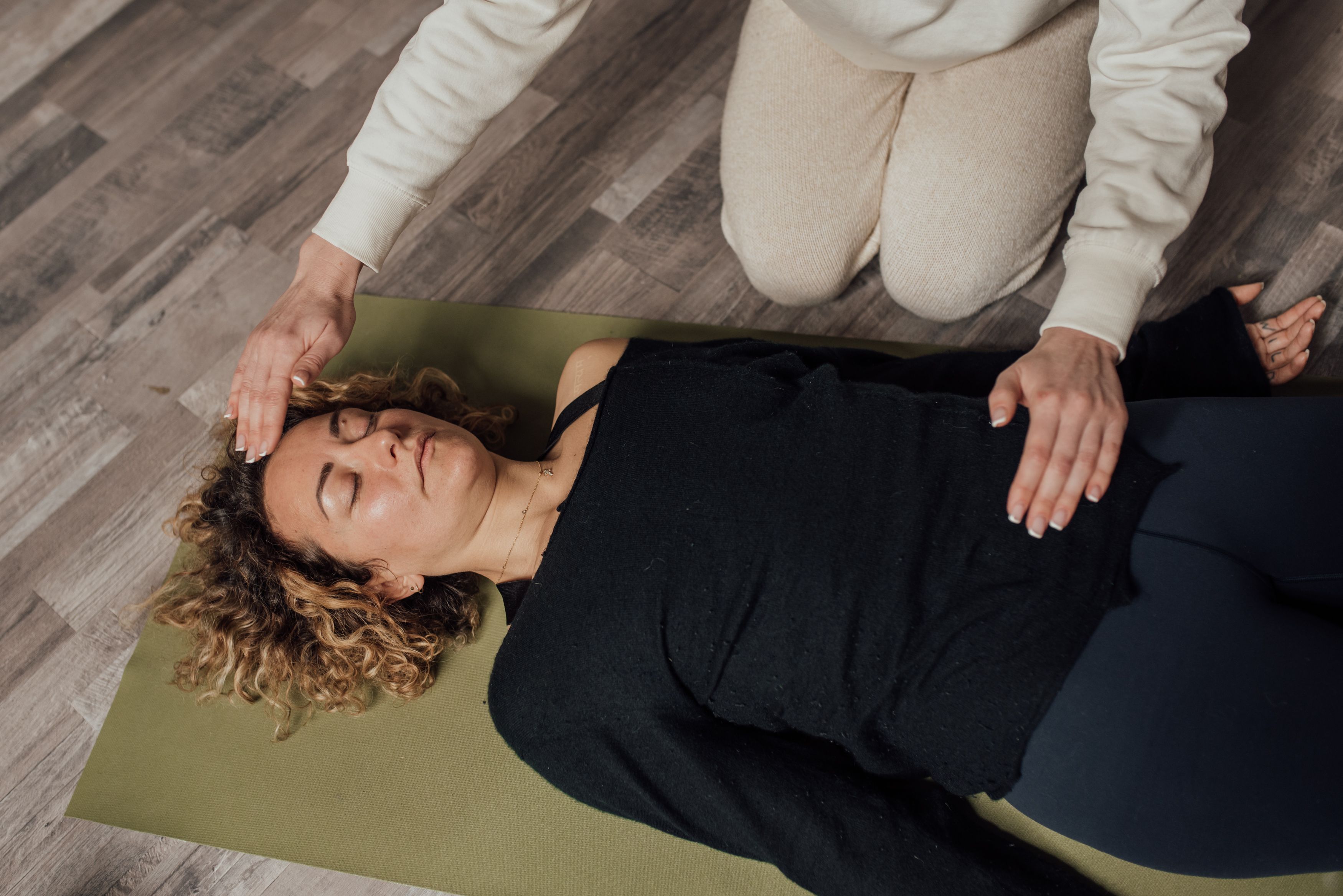
One thing to try tonight. Before you turn off the lamp, six rounds of the four-in, eight-out breath, flat on your back, eyes already closed. Don't wait until you're lying there failing to sleep to start it. Do it as the last thing you do on purpose, before your body takes over and does its own thing anyway.
THE UNCOMMON TOOLKIT
Why the long exhale works, for the skeptic in you. Your exhale is wired to the parasympathetic branch of your nervous system, the branch that tells your body a threat has passed. Drag the out-breath past the in-breath and your heart rate comes down on command. In a 2019 sleep lab study, participants given a psychosocial stress task before a scheduled nap took roughly 17 minutes to fall asleep, against about 9 minutes for a relaxed control group (Frontiers in Psychology, "Psychosocial Stress Before a Nap Increases Sleep Latency," 2019). Your body was still working. Now you know why, and now you know the off switch.
QUICK QUESTIONS
Why can't I fall asleep even when I'm exhausted?
Exhaustion is physical fatigue. Restless sleep is usually nervous system activation, your body still running a "the day isn't over yet" signal from stress hours earlier. You can be tired and activated at the same time, which is exactly what keeps you staring at the ceiling.
What's a fast way to calm your nervous system before bed?
Extended exhale breathing: inhale for four counts, exhale for eight, six rounds, lying down with your eyes closed. The longer exhale activates your parasympathetic nervous system, the branch responsible for signaling that it's safe to power down.
Is restless sleep the same thing as insomnia?
Not necessarily. Clinical insomnia is a diagnosed, persistent condition. Restless sleep from an activated nervous system is a state, not a diagnosis, and it usually responds to a real down-regulation practice rather than a medication or a new mattress. If it's persistent or severe, talk to a doctor. I cannot confirm which one applies to you.
Go forth and do good things!
Kristin, The Uncommon Alchemist